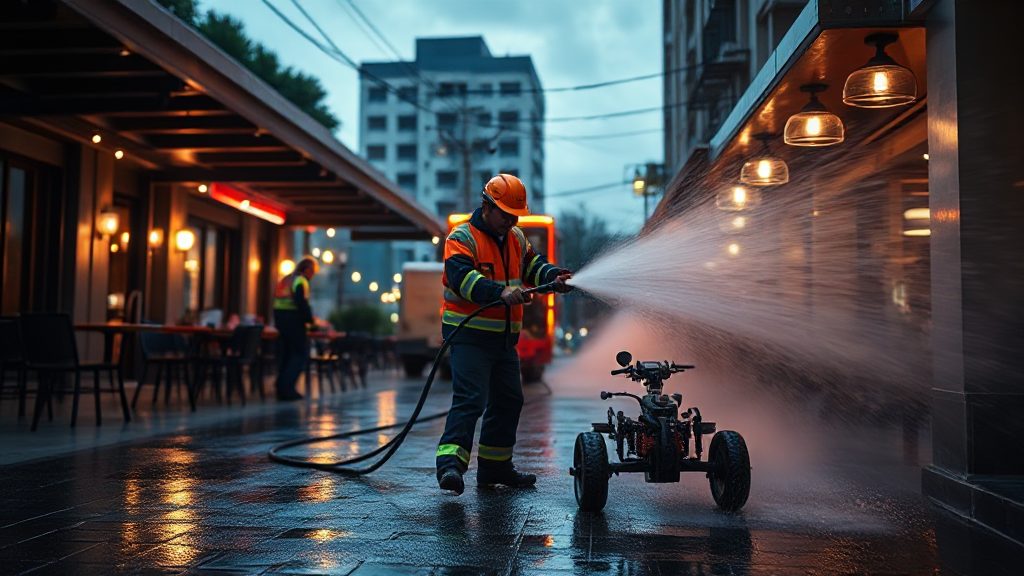
Hydrojetting for Moema Restaurants: Pressure, Process and Payoff
It is 11:40 p.m. in a Moema restaurant kitchen, and the floor drain has stopped swallowing water. Grease from the night’s service has congealed into a pale, rubbery cap over the grate, and the dish pit is backing up with a slow, gurgling threat. This is the exact scenario hydrojetting was built for. If you own a restaurant or shop in this neighborhood and need a specialist who understands commercial grease loads, a desentupidora Moema team can assess the line and choose the right pressure before the problem becomes a closed-kitchen morning.
Hydrojetting is not a bigger snake. It is a controlled high-pressure water process that scours the full inner circumference of a pipe, stripping grease, soap scum and sediment rather than punching a hole through them. For Moema’s dense restaurant blocks, that difference decides whether a drain stays clear for a week or for a year.
Why Moema’s Restaurant Blocks Demand a Different Approach
Moema packs a high concentration of restaurants, cafes, bakeries and small commercial kitchens into a few walkable blocks. Many of these businesses sit in older buildings where the original drain lines were sized for residential use, not for the fat, oil and grease load of a busy lunch and dinner service. When several tenants share a building stack, one kitchen’s grease becomes every tenant’s problem.
The typical failure pattern is predictable. Grease cools as it travels, sticks to the pipe wall, and narrows the passage. Soap and food solids catch on that sticky layer and build a plug. A mechanical snake can pierce the plug, but it leaves the greasy coating in place, so the line clogs again quickly. Hydrojetting removes the coating itself, restoring the pipe closer to its original diameter.
Moema also has a practical constraint: service hours. A restaurant cannot afford a drain failure at 7 p.m. on a Friday. That is why commercial owners here tend to schedule preventive work after closing, and why emergency response matters when a floor drain suddenly backs up during prep. A local desentupidora Moema São Paulo SP team knows the building stock and the typical grease patterns in the area.
Pressure Ranges: Matching PSI to the Pipe and the Problem
Hydrojetting pressure is measured in PSI (pounds per square inch) and flow in gallons or liters per minute. The right combination depends on pipe material, diameter and the type of blockage. Too little pressure and the grease survives; too much on a fragile line and you risk damage. This is where a trained operator matters more than the machine.
As a working rule, small branch lines and older cast-iron drains call for lower pressure with higher flow, while larger main lines can take higher pressure. Restaurant floor drains and sink lines usually fall in a moderate range, while the building’s main sewer line may need a stronger pass. The table below describes the general logic in prose form, because exact numbers should always be confirmed on site.
- Light grease in small branch lines: lower pressure, steady flow, short passes to avoid stressing older fittings.
- Heavy grease in kitchen floor drains: moderate pressure with a rotating nozzle to cut the coating around the full circumference.
- Main building sewer with sediment: higher pressure and higher flow, often with a forward jet to break the plug and a rear jet to flush debris out.
- Fragile or unknown pipe material: reduced pressure and camera inspection first, never a blind high-pressure pass.
The key takeaway is that pressure is a diagnosis, not a default. A responsible operator inspects, tests and adjusts. Blind high-pressure jetting on an unknown line is the most common cause of avoidable damage.
Hydrojetting Versus a Mechanical Snake: When High Pressure Wins
A mechanical snake is a rotating cable with a cutting head. It is excellent for clearing a hard obstruction, retrieving a foreign object, or opening a path through a solid plug. It is fast, compact and useful in tight access points. But it does not clean the pipe wall. Grease, scale and biofilm remain, and the line often clogs again within weeks.
Hydrojetting wins when the problem is a coating rather than a single object. In restaurant drains, the enemy is usually grease, food solids and soap residue spread along the pipe. High-pressure water with a rotating nozzle scours that layer away and flushes it downstream. For a Moema kitchen with a recurring floor drain backup, hydrojetting is often the difference between a temporary fix and a lasting clean.
The comparison is not always either-or. Many jobs start with a snake to open a path, followed by hydrojetting to clean the walls, and sometimes a camera inspection to confirm the result. A good desentupidora em Moema São Paulo SP will explain which stage your line needs instead of selling the most expensive option by default.
What the Hydrojetting Process Looks Like On Site
On a restaurant job, the process follows a clear sequence. Understanding it helps owners ask the right questions and avoid surprises.
1. Access and safety setup
The operator identifies the cleanout or drain access, lays protection for floors and equipment, and confirms water and power sources. In a working kitchen, this means coordinating with the closing team so prep areas are clear.
2. Inspection and diagnosis
Before pressure, the technician assesses the line: pipe material, diameter, age and the nature of the blockage. A camera may be used on unknown or older lines. This step determines the pressure and nozzle choice.
3. Jetting and flushing
The hose is fed into the line and the nozzle is advanced to the blockage. Forward jets break the plug; rear jets pull the hose back and flush debris toward the access point, where it is removed. The operator repeats passes until the line runs clear.
4. Verification and prevention advice
After jetting, the line is tested with flow. The technician may recommend a grease trap schedule, strainer maintenance or a follow-up camera check. Preventive hydrojetting on a schedule is far cheaper than an emergency call during service.
Cost, Downtime and the Payoff for Moema Businesses
For a restaurant owner, the real cost of a clogged drain is not the service fee. It is the lost covers, the closed kitchen, the staff sent home and the reputation hit when a Friday dinner service is cancelled. Hydrojetting is usually priced by line length, access difficulty and the condition found on site, and a preventive schedule spreads that cost across the year.
The payoff shows up in three places. First, fewer emergency callouts, because the grease coating is removed rather than pierced. Second, longer intervals between cleanings, since the pipe flows closer to its design capacity. Third, better compliance with building and sanitation expectations, which matters for any food business in a shared Moema building.
Shop owners face a similar calculus. A retail unit with a backed-up floor drain loses sales hours and risks water damage to stock. A quick, professional jetting job protects the premises and the neighboring tenants. In a dense neighborhood, being the unit that floods the hallway is a fast way to lose goodwill with the building management.
Frequently Asked Questions About Hydrojetting in Moema
Can hydrojetting damage old pipes?
It can if pressure is applied blindly to a fragile or deteriorated line. That is why inspection comes first. A trained operator adjusts pressure to the pipe material and stops if the camera shows a defect that needs repair rather than cleaning.
How often should a restaurant drain be hydrojetted?
It depends on volume and grease management. A busy kitchen with a well-maintained grease trap may need it less often than one without. Many Moema restaurants settle into a preventive schedule based on the first inspection, then adjust as the line’s behavior shows.
Is hydrojetting safe to use during business hours?
It can be, but most restaurants prefer after closing to avoid water, noise and access conflicts in the kitchen. Emergency situations are different, and a 24-hour team can respond when a drain fails mid-service.
Does hydrojetting replace a grease trap?
No. A grease trap captures fat before it enters the drain line. Hydrojetting cleans the pipe, but without proper grease management the coating will return. The two work together as prevention and maintenance.
Leave a Reply